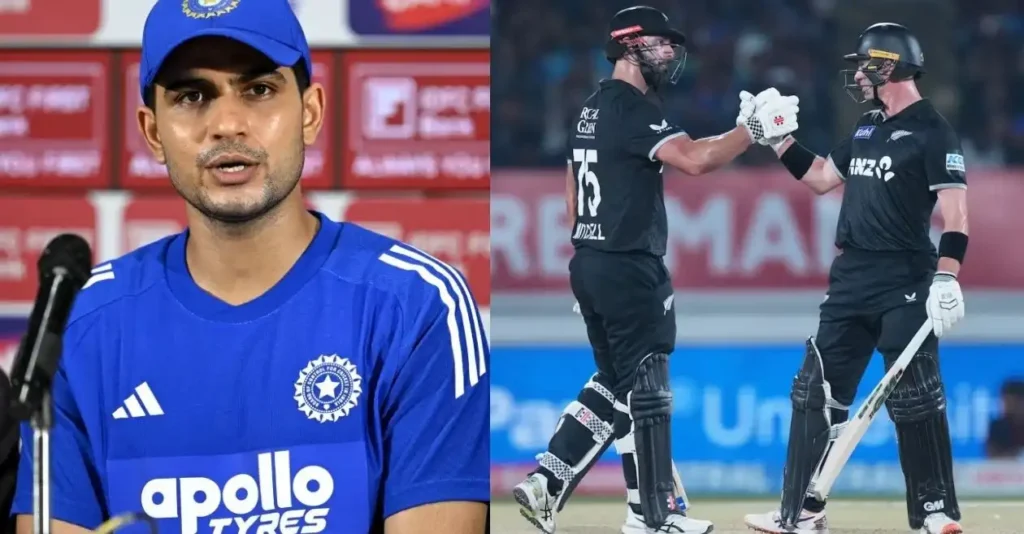

captain of india Shubman Gill After this he presented an honest assessment of his side’s shortcomings. India went down new zealand In the second ODI at Niranjan Shah Stadium. Despite scoring competitively and gaining early movement with the ball, India were unable to exert sustained pressure in the middle overs, a phase which Gill identified as the deciding factor in the match.
India made a strong platform but fell short of the ideal score
After New Zealand won the toss and decided to bowl, India scored 284 runs for 7 wickets in the stipulated 50 overs. The innings started with his brilliant unbeaten century KL RahulWho once again showed his composure under pressure. Gill led the team with a quickfire innings of 56 runs and ensured stability at the top by rotating the strike effectively.
However, India lost a bit of momentum in the closing stages. Although the surface was good for batting, the hosts were unable to take full advantage of the death overs. New Zealand fast bowler Christian Clark Standing with the ball, he took 3 wickets for 56 runs and prevented India from crossing the 300-run mark. In hindsight, those who missed by 15-20 runs were in great danger.
New Zealand dominated in chasing the target on the basis of partnership
In reply, New Zealand chased the target with surprising ease, reaching 286 for 3 in just 47.3 overs. The foundation for this was laid by a solid opening and middle-order performance, with Will Young hitting a good pace of 87 to keep the scoreboard ticking.
However, the decisive performance came darryl mitchellWho remained unbeaten after scoring a brilliant 131 runs. Mitchell felt the pressure early, rotating the strike during the quieter phases, and then expertly accelerating once set, leaving India’s bowlers short of ideas as the innings progressed.
Shubman Gill reveals the reasons for India’s failure in sports
Speaking at the post-match presentation, Gill did not shy away from highlighting where the game slipped up. He stressed that the inability to strike in the middle overs proved decisive, especially with a defensive field.
“We couldn’t take any wickets in the middle overs. With five fielders, if you don’t take wickets in the middle overs, it becomes very difficult, even if we would have added 15-20 runs,” Gill said.
He also reflected on the changing nature of the pitch, noting that it helped initially, but India failed to adapt their approach once conditions became easier.
“The ball was doing a bit in the first 10-15 overs. But after 20-25 overs, the wicket settled down. We could have been a little braver while bowling the middle overs and took more chances.” He also pointed out fielding flaws, which helped New Zealand maintain the momentum.
See also: Harshit Rana destroys Devon Conway with a brilliant Jaffa in the 2nd ODI in Rajkot