


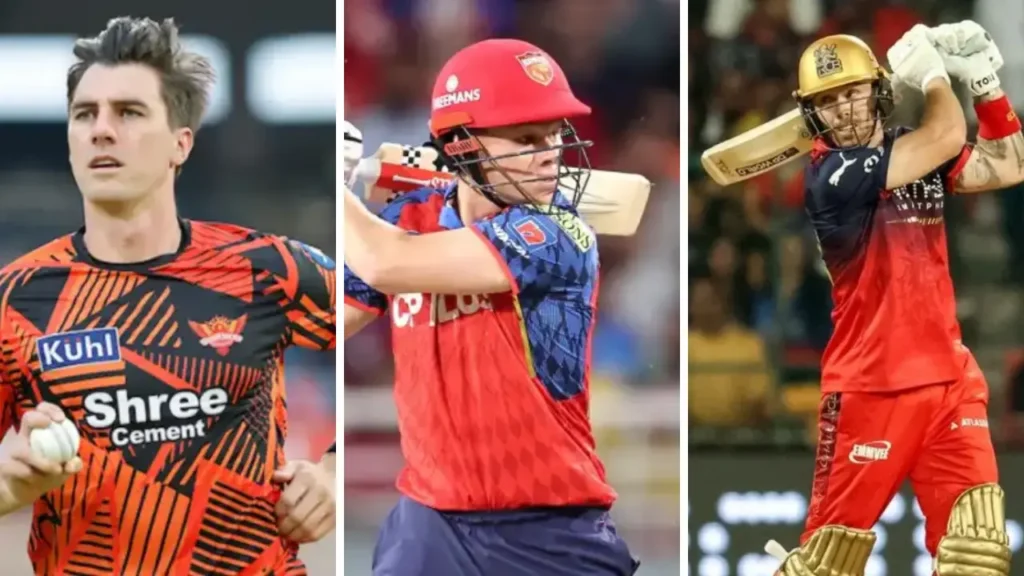
In IPL 2026, there has arguably been a new trend of foreign players returning home for injury scans. Whenever players get injured, their host boards recall them. Many of the players returning home for scans are often among the most important players for their national teams. This year, there have been three prominent examples of this happening.
SRH captain Pat Cummins, Punjab Kings all-rounder Cooper Connolly and RCB batsman Phil Salt all returned to their respective countries (Australia and England respectively) from IPL 2026 for scans and rehabilitation after being injured.
In this article, we will look at three major reasons why players take this drastic step instead of staying in India for treatment.
Cricket boards control player medical decisions of centrally contracted stars
The clearest example of this scenario is KKR all-rounder Cameron Green. At the start of the season, KKR’s Ajinkya Rahane was asked when he would be fit to bowl against Green again. He responded in three words: “Ask Cricket Australia.”
Later reports revealed that CA had prepared a path for Green to return to bowling and had also shared it with KKR. CA did something similar with Australia’s ‘Big Three’ fast bowlers.
Mitchell Starc (Delhi Capitals), Pat Cummins (SRH), and Josh Hazlewood (RCB) all need permission from Cricket Australia before joining their IPL teams. As a result, Starc has played just 1 match in this IPL, Cummins has played just 3 matches and Hazlewood has played just 6 matches.
All three were injured during or after the Ashes, which is scheduled to be held from the last week of November 2025 to the first week of January 2026. Cricket Australia also barred Cooper Connolly from bowling and called him back to Perth for a scan of his back.
England and Wales Cricket Board (ECB) also has a similar policy in this regard. An example of this was when Phil Salt went to the UK to have his finger scanned after his injury.
CA and the ECB are not the only boards taking this cautious approach. Sri Lanka Cricket (SLC) has also blocked the NOCs (No Objection Certificate) of at least two players (RCB’s Nuwan Thushara and LSG’s Wanindu Hasaranga) and barred them from participating in IPL 2026.
Players trust the medical ecosystem more
Naturally, all players will be attracted to the ecosystems that exist in their home countries. Even when they are in India for the IPL, they will still have easy access to the best healthcare facilities in India, courtesy of the billionaire owners.
However, for most players, the convenience of their own doctors, especially those who have their own home boards, cannot be compromised. When treated well by the board, players can also be assured that their needs are being fully met as the board wants fully fit players.
When playing for their national teams, these foreign players are rarely brought back into the setup as quickly as possible. On the other hand, IPL teams are often eager to get the full value of their million-dollar investments.
Insurance coverage, contract and liability issues
Like many other things, players’ injury rehabilitation is covered by insurance and the specific terms of their contract. When players seek treatment outside, issues arise related to their insurance coverage.
Since each board has its own healthcare providers from its home country, they also have insurance companies that operate from there. Violations of these terms result in liability issues.
In many cases, insurance companies do not cover medical assistance from sources that are not covered by them. It is almost impossible to find an English or Australian insurance company that will cover a doctor in India.
When players violate the terms of their central contracts set by insurance companies, it also opens them up to litigation and breach of contract. For a centrally contracted player in a big cricketing country like England or Australia, this is a risk they may not want to take.
ALSO READ: Lungi Ngidi injury update: DC provides official update on South African pacer ahead of CSK clash