


table of contents


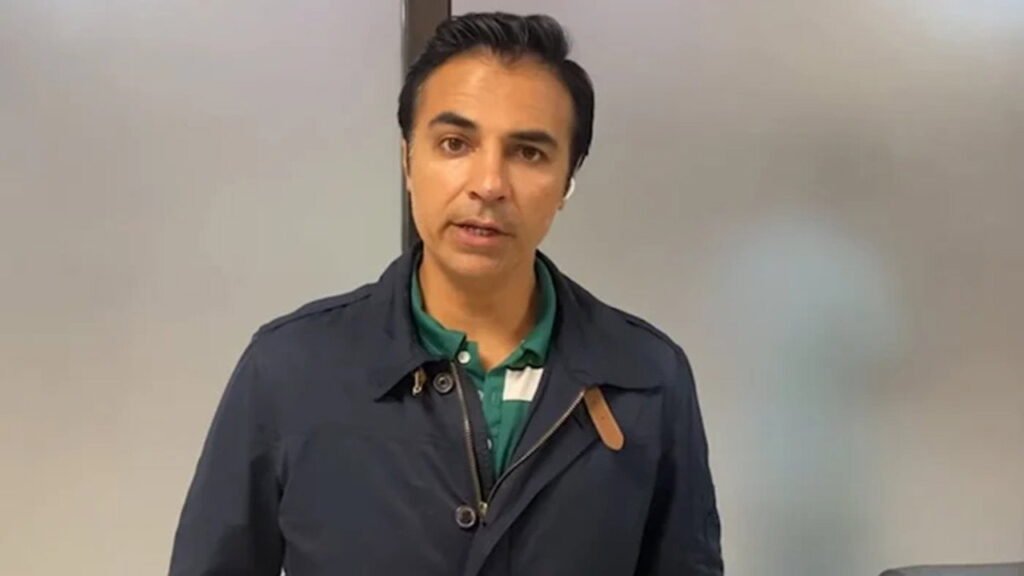
Former Pakistan captain Salman Butt has got a new role in Pakistan cricket after being appointed as the host of the official podcast of the Pakistan Cricket Board. The development has once again brought one of the most controversial figures in Pakistan cricket history into the spotlight, with many reminding many of the spot-fixing scandal that ended his international career more than a decade ago.
Under the administration of PCB chairman Mohsin Naqvi, Salman Butt will now lead the board’s official digital content initiative. The former opener is set to host a show called Straight Drive with Salman Butt, where he will discuss Pakistan cricket, analyze matches, conduct interviews and provide updates on developments within the game.


Salman Butt gets new responsibility of PCB under the leadership of Mohsin Naqvi
The Pakistan Cricket Board has handed Salman Butt a major media role by appointing him as the host of its official podcast.
As part of his new duties, Salman Butt will present Straight Drive with Salman Butt, a show expected to include cricket analysis, discussions on Pakistan cricket, interviews and behind-the-scenes insights from the national setup.
The move is another step towards Butt’s gradual reintegration into the mainstream of Pakistan cricket after the completion of his ban period. Over the years, he has been active as a television analyst, commentator and cricket expert on various digital platforms.


Although this appointment is not directly related to team management or selection matters, it has attracted attention due to his controversial past and involvement in one of cricket’s most notorious corruption scandals.
salman butt spot fixing scandal details
Salman Butt’s name is linked to the spot-fixing controversy that shook world cricket in 2010.
The scandal came to light during Pakistan’s tour of England when allegations emerged that specific no-balls were deliberately bowled during the Lord’s Test match as part of a betting arrangement. A newspaper investigation alleged that Pakistan captain Salman Butt, along with fast bowlers Mohammad Amir and Mohammad Asif, were involved in carrying out pre-planned incidents on the field for financial gain.
Unlike match fixing, which attempts to influence the outcome of an entire match, spot fixing revolves around manipulating specific moments within the game. Investigators concluded that a premeditated no-ball was arranged and that the betting syndicate was informed.
The ICC launched an anti-corruption investigation and ultimately found all three players guilty of violating the anti-corruption code. Butt received the harshest punishment of the three, a ten-year ban with five years suspended. Mohammad Asif was banned for seven years and suspended for two years, while Mohammad Aamir was banned for five years.
The matter went beyond cricket. In 2011, a London court found Butt guilty of conspiracy to commit fraud and conspiracy to accept corrupt payments. He was sentenced to 30 months in prison and served part of the sentence before being released.
Although he returned to domestic cricket after completing his ban and later turned to media work, controversy has continued to define a large part of his legacy.
PCB removes Salman Butt from the post of selection advisor in 2023
This is not the first time that Salman Butt has found himself at the center of a debate over a role within the PCB.
In December 2023, the PCB appointed Butt as advisors to chief selector Wahab Riaz, along with former cricketers Kamran Akmal and Rao Iftikhar Anjum. The purpose of the appointment was to assist the selection committee in evaluating players and team combinations.
However, the decision immediately sparked widespread criticism from fans, former cricketers and a section of the media. Many questioned whether a player previously banned for corruption should be given an official role in the administration and selection process of Pakistan cricket.
The backlash quickly escalated, with critics arguing that the appointment sent the wrong message regarding accountability and integrity in the sport.
Just a day after the announcement, Wahab Riaz confirmed that Butt’s name had been withdrawn from the advisory panel. The chief selector said he wanted to avoid unnecessary controversies around the PCB and ensure that questions related to bias or personal relationships do not overshadow the work of the board.
Reports at the time also revealed that the appointment faced opposition from some sections of the PCB itself. Ultimately, Butt’s brief tenure as selection advisor ended before he performed any official duties in the role.
So his latest appointment as podcast host is likely to generate new discussion, although it is quite different from a decision-making or team-selection situation.
salman butt pakistan career statistics
Before his international career came to an abrupt end due to the spot-fixing scandal, Butt was considered one of Pakistan’s most talented opening batsmen. The left-handed opening batsman represented Pakistan in all three formats between 2003 and 2010 and amassed impressive numbers, especially in ODI cricket.
In Test cricket, Butt played 33 matches and scored 1,889 runs at an average of 30.46. He recorded three centuries and ten half-centuries with a highest score of 122. While his Test statistics were solid rather than spectacular, he was seen as one of Pakistan’s long-term opening options.
His best performances came in One Day Internationals. Butt appeared in 78 ODIs and scored 2,725 runs at an average of 36.82. During that period, he scored eight centuries and 14 fifties, while his highest score was 136. His ability to structure innings and play long innings made him a regular member of Pakistan’s ODI setup.
In T20 Internationals, Salman Butt represented Pakistan in 24 matches, scoring 595 runs at an average of 28.33 and a strike rate of around 108. Although he did not score a century in the format, he recorded three half-centuries and reached a highest score of 74.
His domestic statistics paint a picture of a batsman who achieved considerable success beyond international cricket. In 131 first-class matches, Butt scored 8,921 runs at an average of 41.88, including 25 centuries and 35 fifties. His highest first-class score was 290.
He was equally brilliant in List A cricket, where he scored 8,586 runs in 206 matches at an average of 46.16. Butt scored 24 centuries and 47 half-centuries in this format, which underlines his consistency in limited overs cricket.
In overall T20 cricket, the former Pakistan captain scored 2,349 runs in 82 matches at an average of 35.05 and a strike rate of 112.98. He recorded 16 half-centuries and remained unbeaten on 99 runs on one occasion, narrowly missing out on a maiden T20I century.
Despite these impressive statistics, Salman Butt’s cricketing legacy remains overshadowed by the 2010 Lord’s spot-fixing scandal, one of the most infamous controversies in the history of the game.