




As Indiapreparing for 2027 ODI World Cup While beginning to take shape, recent performances have raised important questions about team composition and strategic direction. Even with major players like Rohit Sharma,Virat KohliAnd Jasprit Bumrah Despite the composition of the team, Team India has sometimes seemed to lack the innate cohesion required to dominate major 50-over events.
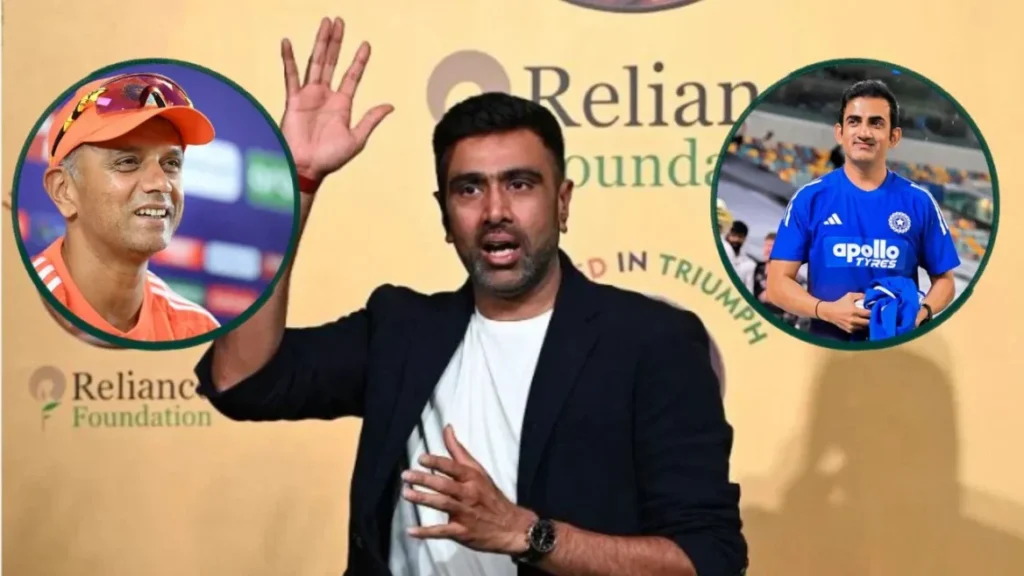
Experienced off spinner sharing his perspective on this matter Ravichandran Ashwin Provided an in-depth, analytical account comparing team culture under the current head coach Gautam Gambhir With the framework established by his predecessor, Rahul Dravid.
Ravichandran Ashwin reveals what separates Gautam Gambhir’s system from Rahul Dravid’s
The difference between the two coaching eras lies largely in their philosophical approach towards team balance and structure. While Dravid preferred rigid structure, tactical stability and reliance on key specialists, Gambhir’s management style leaned towards players with versatility and multi-skilled utility.
According to Ashwin, a primary concern with the current approach is “over-reliance on”.bits and pieces“Cricketers to fill the tactical gaps. This dilemma is most evident in India’s search for a reliable fast-bowling all-rounder as a backup or partner. hardik pandya. Options to manage Pandya’s workload carefully due to recurring injury concerns such as Nitish Kumar Reddy And Shivam Dubey Has been brought into the fold. However, secondary fitness issues and varying skill levels make the combination weak.
“If Hardik is not there then it is Nitish Kumar Reddy and then Shivam Dubey. There is no point in talking about players who are not ready to play in your combination. If they’re injured, they’re injured. That’s par for the course in any game. Look at the 2023 World Cup, which failed simply because Hardik was not part of the combination. But as soon as that failed, they were not searching, and they did not try to play the sixth bowler. He played the skin differently and went with five bowlersAshwin said on Cricinfo.
Reflecting on how Dravid overcame similar hurdles during the 2023 ODI World Cup following Pandya’s injury midway through the tournament, Ashwin pointed out that the previous management had chosen clarity over temporary fixes. Rather than struggle for secondary options who could not replicate Pandya’s primary duties, Dravid’s setup accepted the constraint, supported five specialist bowlers, and maintained total role clarity for the rest of the team. That pragmatic approach took India to the final.
Ashwin stressed that relying too much on multi-utility players could undermine long-term success, especially in formats where specialist skills decide the outcome. Match-winners with primary expertise – whether solely with the bat or with the ball – remain the backbone of championship-winning teams.
Also read: Top 5 youngest players to score a fifty in T20I. Vaibhav Suryavanshi
Road to 2027: Why long-term clarity and a fixed core are important for Team India
To avoid tactical reshuffle mid-tournament, Ashwin believes the management should immediately establish a core pool of 17 to 18 players and commit to them over the next 14 months.
This core pool should ideally include:
- Two designated wicketkeeper-batsmen for tactical coverage.
- The three specialist spinners are suitable for different subcontinent and global conditions.
- The five leading fast bowlers were strategically rotated to manage the workload.
Instead of constantly auditioning new talent or finding temporary all-around solutions, the coaching staff needs to rotate within this fixed group. Doing so allows management to test different tactical combinations while providing players with the stability needed to perform under pressure.
For India to truly build a strong team for the 2027 World Cup, deciding on role clarity and supporting proven match-winners will be far more decisive than chasing short-term tactical balance.