


table of contents


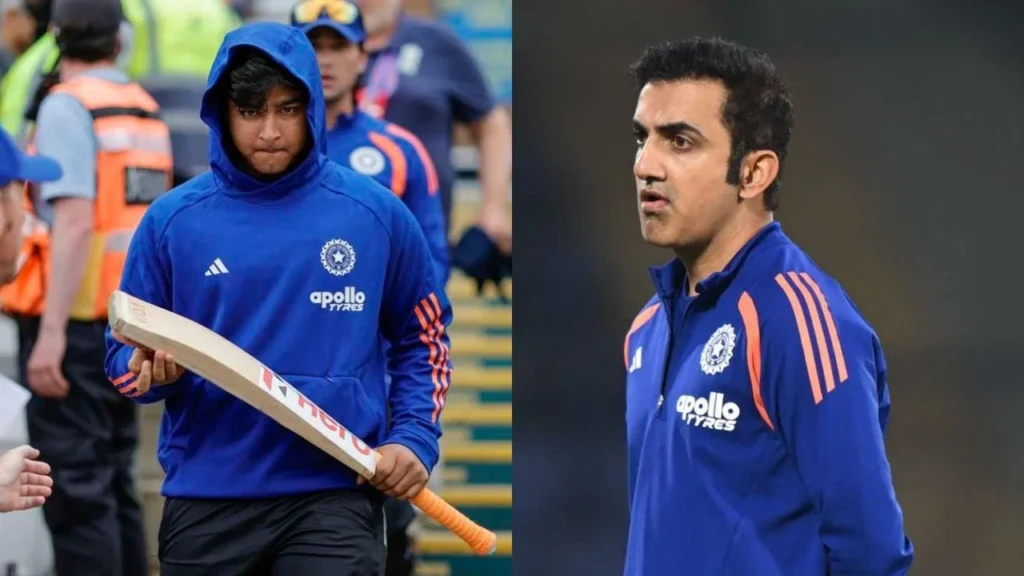
The rise of Vaibhav Suryavanshi is nothing less than extraordinary. At the age of just 15, the talented player from Bihar has achieved what countless cricketers only dream of by representing India at the highest level. However, with that opportunity comes immense pressure, especially because he has replaced Sanju Samson in India’s T20I playing XI.
That decision has already divided opinion among fans, making it even more important for the Indian team management to protect the young player from unnecessary criticism. India head coach Gautam Gambhir has time and again endorsed fearless youngsters and Vaibhav Suryavanshi is the latest example of that approach.

But supporting a teenager is not limited to giving him a debut cap. It also means protecting him from outside noise, social media scrutiny and comparisons that can easily influence a player who is only 15 years old. At this stage of his career, Suryavanshi should be allowed to focus on learning and development rather than carrying the burden of debating selection decisions.
Vaibhav Suryavanshi created history with his debut at the age of 15
Vaibhav Suryavanshi created history when he made his T20 debut against England and became the youngest player to represent India in international cricket.
At the age of 15 years and 99 days, he broke the long-standing record of Sachin Tendulkar, the legendary batsman who debuted for India in 1989 at the age of 16 years and 205 days.


The left-handed opening batsman also became the first 15-year-old to play a T20 International for an ICC full member country. In all men’s international cricket involving full member teams, only Pakistan’s Hasan Raza is believed to have made his debut at a younger age, although questions were later raised about his recorded age.
Before Suryavanshi, only Ireland’s Josh Little and Afghanistan’s Mujeeb Ur Rahman had represented Full Member nations in T20Is at the age of 16. This milestone underlines how much Indian cricket values teenagers.
Vaibhav Suryavanshi’s performance so far
Suryavanshi has shown glimpses of his aggressive intent in his first two T20Is, although the runs have not been consistent yet.
On debut against England in Manchester, the youngster scored 14 runs off 10 balls at a strike rate of 140.00. He looked positive during a quick opening stand before attempting to attack Will Jax. Charging down the track, he missed the delivery and was cleverly stumped by Jos Buttler.
In the third T20I at Trent Bridge, Suryavanshi once again played fearlessly and scored 13 runs in just five balls at a strike rate of 260.00.
He hit two fours before falling to Jofra Archer, who bowled him with a 145 km/h short ball. Trying to hook an express delivery, the teenager only managed to get it past Buttler behind the stumps.
Although scores of 14 and 13 may not seem significant, they have come with an aggressive mindset that India clearly want to encourage. At just 15, Suryavanshi is still learning the demands of international cricket, and occasional setbacks are an inevitable part of that journey.
Why should India protect Vaibhav Suryavanshi from outside noise?
In my opinion, this is where Gautam Gambhir and the Indian team management have the biggest responsibility.
Vaibhav Suryavanshi has replaced Sanju Samson in India’s playing XI, and it naturally attracts a lot of attention. Samson is one of the most popular cricketers in India, he has a huge fan following who supports him passionately. Whenever results don’t go India’s way, any youngster stepping into his shoes is bound to attract comparisons and criticism.
This became evident after India’s massive defeat in the third T20I against England, when Gautam Gambhir was greeted with chants of “We want Sanju” as he was leaving the stadium.
While those slogans reflected the frustration of a section of supporters, repeatedly exposing a 15-year-old to such an environment can have long-term consequences on his self-confidence and mental well-being. Suryavanshi should never feel that he has to justify replacing another player whenever he walks out to bat.
His focus should remain on improving his game, adjusting to international cricket and fulfilling the role that the team has given him. The responsibility of managing public opinion lies with the management, not with any teenager. If India truly believes that Sooryavanshi is part of their long-term plans, then they should continue to support him while keeping him away from the toxicity that often surrounds social media and fan debates.
Young talents blossom when they are given time, patience and a safe environment. Without that security, even the brightest prospects can struggle under the weight of expectations. For this reason, protecting Vaibhav Suryavanshi from outside noise should be Gautam Gambhir’s biggest priority in the coming months.