The India-Pakistan match in the ICC T20 World Cup 2026 was expected to be the biggest attraction of this marquee tournament. However, this turned into political pressure and confusion at the top, while a heavy defeat on the field turned the occasion into one of anger and embarrassment for Pakistan fans and officials.
India defeated Pakistan by 61 runs in their T20 World Cup 2026 match on Sunday, February 15. They secured a Super 8 berth after three consecutive wins. Batting first, India scored a total of 175/7. After this, the bowlers took complete control and completed the one-sided match by bowling out Pakistan for just 114 runs in 18 overs.
Pakistan’s boycott threat shakes T20 World Cup 2026 organizers
Pakistan’s stance has put ICC and the organizers of the T20 World Cup 2026 under pressure regarding participation. After Bangladesh’s withdrawal, PCB Chairman Mohsin Naqvi publicly questioned the ICC and called it a unilateral decision.
Naqvi spoke of “respect” for Pakistan and his comments quickly turned into a threat of boycott. The possibility of Pakistan withdrawing worried the ICC and broadcasters, as the biggest match of the tournament suddenly faced uncertainty.
The matter soon reached the Pakistani government. After several days of confusion, the government allowed the team to skip the India match and play the tournament. This decision helped Pakistan avoid immediate ICC action but left the board looking divided and uncertain.
A U-turn that exposed Pakistan
The PCB changed its position and confirmed that it will not accept Colombo’s R. Will play India at Premadasa Stadium. The boycott threat ended, but the reversal left Pakistan exposed, raising questions about its decision-making capacity and credibility.
The PCB took a U-turn after talks with the ICC and the cricket boards of Sri Lanka and the United Arab Emirates. Pakistan officially withdrew the boycott threat and agreed to go ahead with the event, even though off-field drama continued to dominate the narrative.
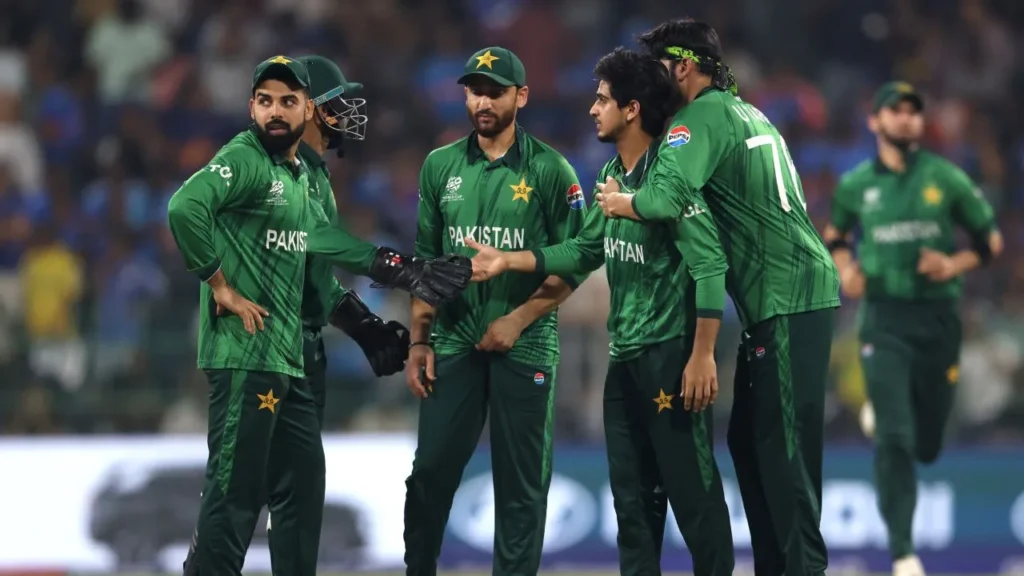
The team led by Salman Ali Aga was surrounded by criticism in this match. Fans remained divided, officials tried to justify their actions and players took to the field under pressure created by events away from cricket.
India’s dominance due to Pakistan’s decline under pressure
India performed brilliantly to defeat Pakistan in the T20 World Cup 2026 match. R Premadasa Stadium in Colombo On Sunday, February 15. After being invited to bat, India scored a total of 175/7. Ishan Kishan scored 77 runs in 40 balls, which included 10 fours and three sixes.
Pakistan lost early wickets and slipped to 13/3, putting them under immediate pressure. Usman Khan’s 44 provided brief resistance, but the batting collapsed soon after and the team was all out for 114 in 18 overs.
Indian bowlers Hardik Pandya, Jasprit Bumrah, Axar Patel and Varun Chakraborty achieved a one-sided result by taking two wickets each. Ishan received the Player of the Match award for his aggressive batting on a challenging surface where other batsmen were struggling to middle the ball.
India registered its third consecutive win and secured its place in the Super Eight. The Men in Blue took their T20 World Cup tournament record against Pakistan to 8-1, further cementing their dominance in the rivalry.
| match scorecard summary |
|
|
|
|
| Team |
score |
over |
top batsman |
bowling figures |
| India- first innings |
175/7 |
20 |
Ishan Kishan- 77 (40) |
Saim Ayub – 3/25 (4) |
|
|
|
Suryakumar Yadav- 32 (29) |
Salman Agha – 1/10 (2) |
| Pakistan – 2nd innings |
114/10 |
18 |
Usman Khan – 44 (34) |
Hardik Pandya- 2/16 (3) |
|
|
|
Shaheen Shah Afridi – 23* (19) |
Varun Chakraborty – 2/17 (3) |
Mohsin Naqvi’s early exit sparks fresh outrage
PCB Chairman Mohsin Naqvi left the stadium before the end of the match. When Pakistan struggled during the chase, cameras later showed him sitting in his car while the team was still batting, triggering an immediate reaction.
The Pakistan Cricket Board did not provide any explanation for his early departure. Fans and former players raised questions as to how a top official of the board could run away during such an important match.
R. Officials present at the Premadasa Stadium confirmed that Naqvi walked out while the game was in progress. Many saw this moment as a clear sign of failure of leadership in a rivalry where every action counts.
Damage control failed after the match
In the post-match press conference, head coach Mike Hesson tried to keep the narrative steady. He denied that there was any pressure due to Mohsin Naqvi’s pre-match visit. Hesson described the PCB chairman as a strong supporter of the team and said it was part of his role to meet the players before games.
Hesson also admitted that the defeat devastated the dressing room and acknowledged how much the match meant to Pakistan. He said that the players feel that they did not perform up to their potential.
However, the calm explanation did little to quell public anger. Fans had already formed their opinions, and criticism on social media revealed that the story had progressed far beyond the press conference statements.
“I had a little hope that we would at least compete, but it has become routine. We have no answer to Bumrah or Hardik. Well played as always, Team India,” a supporter was quoted as saying by ANI.
Would it have been better to stick to the boycott?
After the match many Pakistani fans started asking tough questions. He said that leaving the game could have been a better option. People on TV shows, YouTube channels and social media argued that a boycott could have saved Pakistan from another huge loss to India.
However, a boycott could cause serious problems. Pakistan would have had to face ICC action and a financial loss of ₹200 crore. Nevertheless, many believed that pride mattered more than money, and some supporters believed that a boycott would have caused less harm overall.
Pakistan might have had to face defeat on paper, but the players would not have had to face defeat by 61 runs on the field. This also does not create an image of the officials leaving the stadium in a hurry. Instead, Pakistan played out, lost heavily and ultimately lost both pride and credibility.
conclusion: The match between India and Pakistan became more than just a cricket match. This highlighted serious issues within Pakistan cricket, including political pressure and weak leadership.
The team and the board were embarrassed. Pakistan still has a chance to reach the next stage of the tournament. They must win their final group-stage match against Namibia to advance to the Super 8 stage.
Also read: Did Pakistan lose the match to India due to Mohsin Naqvi’s ‘poisonous’ pep talk? Mike Hesson breaks his silence