


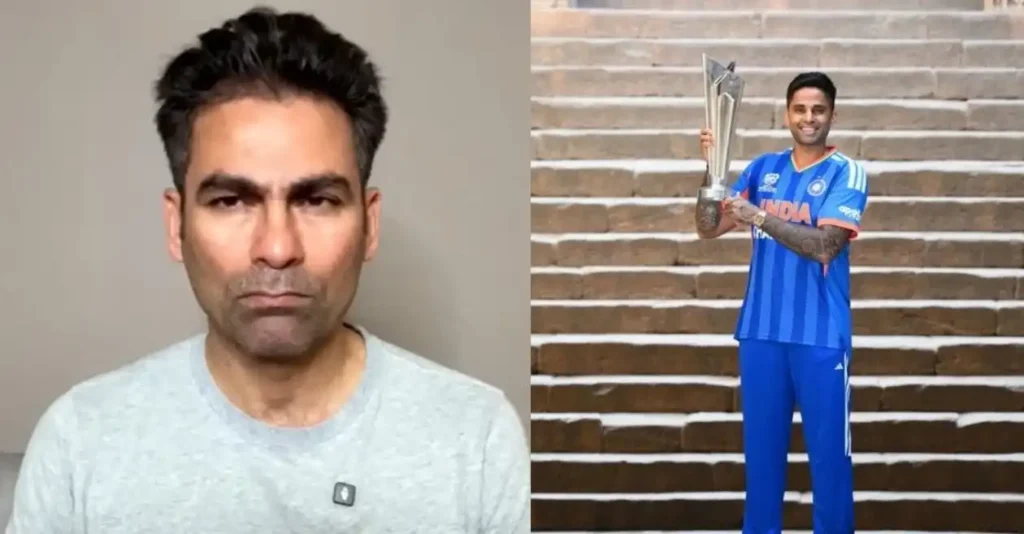


India’s recent T20 World Cup win under the leadership of Suryakumar Yadav This has sparked celebration across the cricket world, but conversations have also quietly begun about the long-term leadership of the team. At the age of 35, Suryakumar is currently standing at that stage of his career where discussion about the future is natural. While the dynamic batsman continues to perform effectively and guide the team, Indian cricket may soon need to prepare for the next captain in the shortest format.
Suryakumar’s aggressive mindset and innovative batting style has defined India’s T20 approach in recent years. Under his leadership, the team recently won the T20 World Cup trophy displaying fearless cricket and strong team cohesion. His tactical awareness, calmness under pressure and trust in his players have played a vital role in India’s success on the global stage.
However, with the veteran batsman reaching the final stages of his career, many former cricketers believe it would be wise for India to identify potential successors early. Leadership changes in modern cricket often require careful planning, especially in a demanding format like T20 cricket where the decision-making process must be quick and precise.
Mohammad Kaif named India’s next T20I captain
Former Indian cricketer Mohammad Kaif The wicketkeeper-batsman believes sanju samson He could be a strong candidate to take over the captaincy whenever Suryakumar decides to step down. Kaif highlighted Samson’s leadership experience and maturity as key qualities that could make him a suitable choice for the role.
Kaif explained that leadership in cricket goes beyond strategy and requires a deep understanding of the players and the situations. According to him, a captain should be someone who has experienced different phases of the game and understands the challenges faced by his teammates. He stressed the importance of supporting players during difficult times and pointed to instances where struggling players needed the support of their captain.
“It’s hard to say right now who will be the next captain, but Samson could be one. I mean, why not? A captain should be someone who has seen the world. Implementing changes in bowling, playing the right XI and supporting out-of-form players like Abhishek Sharma and Varun Chakraborty. A captain will know that these things happen. They have gone through it themselves. They understand these little things,” Kaif said this to Ravish Bisht in a video.
Kaif said Samson fits that profile well as the former Rajasthan Royals captain has already led an IPL franchise and understands how to manage a team under pressure. His leadership journey in the league, which also includes taking Rajasthan to the final in 2022, demonstrates his ability to lead in high-stakes tournaments.
Kaif also made it clear that if Suryakumar maintains his form and fitness, he can continue leading India for the next many years. In modern T20 cricket, players often extend their careers into their late 30s, meaning the current captain still has time to remain at the top if he wants to continue.
“So, I think, Samson can definitely be a candidate. However, if Surya keeps playing well then he can remain in the position for a long time. If you are fit, you can play till 38-39. No problem. And in the shorter format, you need more experience. Someone who has captained is always valuable. If Surya decides to step down, Sanju can fill that spot. He has captained a lot in the IPL And has taken Rajasthan Royals to the final (2022). He may be the next Indian captain. Kaif added.
Also read: “Next stop is Olympic gold”: Suryakumar Yadav reveals LA 2028 dream after India’s T20 World Cup win
Impressive numbers at global event
Samson’s performance in the T20 World Cup further strengthened his claim as a future leader. The stylish right-hander played a key role in India’s campaign and emerged as one of the standout performers of the tournament. He finished the competition with 321 runs in five innings at an impressive average of 80.25 and a remarkable strike rate of 199.37. His aggressive approach at the crease gave India fast starts and momentum in important matches.
The wicketkeeper-batsman hit 27 fours and cleared the ropes 24 times during the tournament, displaying both elegance and power. More importantly, his contributions came in high-pressure situations. Samson scored three consecutive half-centuries, including match-defining innings in both the semi-finals and the final. Those innings proved crucial in India’s record third T20 World Cup title.