


table of contents


Legendary Australian cricketer Matthew Hayden has raised a major concern over the future of international cricket as franchise leagues continue to grow around the world. Matthew Hayden believes the game of cricket is entering a new phase, where club and franchise cricket is becoming more powerful, creating new challenges for international formats.
Hayden feels that the biggest threat at the moment is to One-Day International (ODI) cricket. While Test cricket and T20I games continue to attract attention, he believes the ODI format is in a tough spot and needs immediate planning from top global executives.

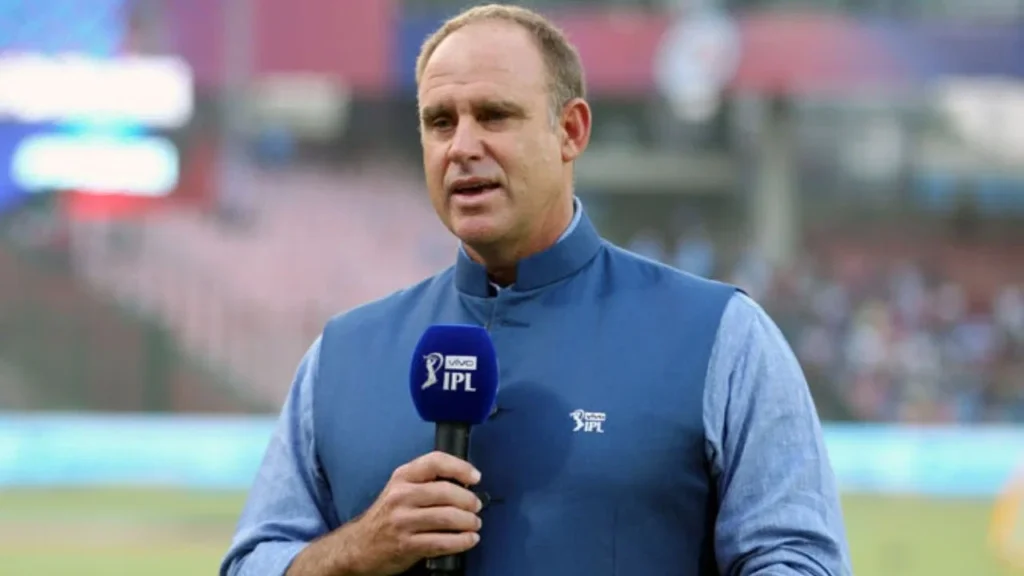
Matthew Hayden has given a big warning to the ICC regarding the future of the ODI format as the trend of franchise leagues continues to grow.
Matthew Hayden said that world cricket is changing rapidly and franchise-based competitions are becoming a major part of the cricket calendar. He acknowledged that this change was always due, as many other sports around the world have already moved towards club-based competitions.
This great batsman feels that cricket is now moving on the same path, but it has created a new challenge for international cricket. Hayden has urged the International Cricket Council (ICC) to manage the rapid growth of franchise tournaments while also protecting international cricket.
Hayden feels the ICC needs to work together with all cricket boards and find a long-term solution that keeps every format of the game alive, especially the ODI format. Meanwhile, Jay Shah’s ICC reveals the road to LA 2028 Olympics, with India the first team to qualify.


“We have an international body called the ICC that has big questions to answer. They have questions from their stakeholders, which are all their associated countries and also their primary Test playing countries, so that they come up with a program that essentially deals with this exact issue,” Matthew Hayden is quoted as saying in the PTI video.
Matthew Hayden raised serious questions on the future of ODI and bilateral cricket.
The Australian legend reiterated that the future of ODI cricket is uncertain as players will continue to be attracted towards franchise tournaments. Hayden also said that bilateral cricket has been struggling for the last few years and every international series no longer generates the same excitement as before.
He said only a few major tours, such as India’s tour of Australia, Australia playing England or South Africa’s tour, continue to attract massive global attention. Hayden also admitted that the ICC World Test Championship has also rekindled the interest in Test cricket among fans.
Hayden added, “I think in many ways, one-day cricket is probably the format that has a lot of question marks around it. Or do we deal with bilateral negotiations, and how, in my opinion, that’s been pretty much useless for many years?”
Matthew Hayden urges ICC to protect small cricket nations and ODI cricket
Meanwhile, Hayden has also pointed out that teams like West Indies, Bangladesh and Sri Lanka are not in good shape despite being an important part of world cricket. He believes many of them feel left behind as big countries like India, Australia and England continue to dominate the programme.
Also, Hayden clarified that he is not against franchise cricket, and he is proud that these leagues are helping the game grow by taking cricket to new places and inspiring more boys and girls to pick up a bat and ball instead of choosing sports like football or rugby.
Video | Australia’s great opening batsman Matthew Hayden said ODI cricket is a format that faces the biggest existential questions in an increasingly franchise-driven landscape, while he insisted that the European T20 Premier League (ETPL) has been designed as a developmental competition…IC.TeawITeaTeaER.Cheym/5ATeannImxJade0
– Press Trust of India (@PTI_News) JYoulthis 4, 2026
However, Hayden feels that the game cannot focus only on franchise cricket, as he has urged the ICC and cricket boards to sit together and find the right balance between international cricket and franchise leagues to safeguard the future of ODI cricket and other formats.
He concluded by saying, “So, you know, we need to be cricket that makes noise. We are a sport that doesn’t want to disappear into the realm of other global competitions. But we need to have some serious conversations about the sport’s pathway programs.”