


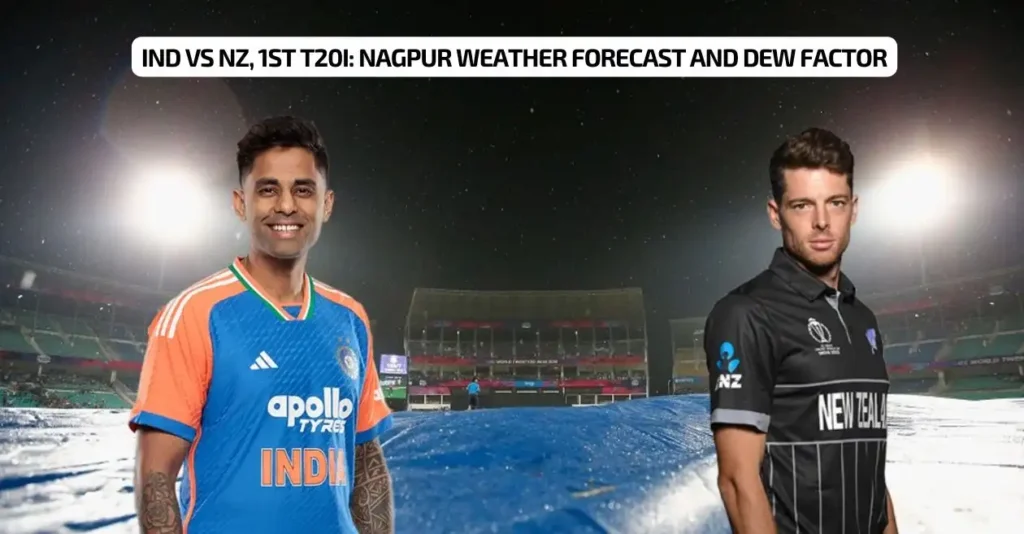


The five-match T-20 series is starting from today. India And new zealand. After a hard-fought ODI phase, where the Blackcaps created history by winning their first bilateral series in India, the focus has now shifted to the shortest format as both the teams have fine-tuned their squads for it. 2026 t20 world cup.
India aim to extend home dominance as confident New Zealand pose a tough challenge
India is entering this series under the leadership of Suryakumar YadavLooking to maintain their dominant domestic record in T20Is. The host team has got a boost from the return of Jasprit Bumrah And hardik pandyawhile explosive Abhishek Sharma Expected to set the tone at the top.
New Zealand, captained by michel santnerComes with high confidence. His ability to adapt to Indian conditions was evident in ODI matches and with players like devon conway And darryl mitchell At best, they represent a significant threat. Historically, Nagpur has not been a high-scoring ground, often preferring tactical bowling rather than power-hitting, setting the stage for an engaging chess match between the two sides.
IND vs NZ, 1st T20I: Nagpur Weather Forecast
Cricket fans heading to the Vidarbha Cricket Association Stadium can heave a sigh of relief as it looks like the weather in Nagpur will not play havoc with the opening T20 match between India and New Zealand. The conditions are expected to remain stable, paving the way for the full 40 overs match to be played without any interruption.
- temperature: The temperature at the time of the match will be around 19 degrees Celsius, providing pleasant playing conditions for both the teams. The relatively cool evening will help the players maintain the intensity throughout the 40 overs.
- damp: The humidity level is expected to be around 58%, which may indicate moisture in the air. This can help the seamers, especially in the later stages of the game.
- cloud cover: Cloud cover is expected to be around 44%, becoming partly cloudy till evening. However, this is unlikely to have any impact on the game.
- Precipitation: No precipitation is expected, 0.0 mm of precipitation is forecast and there is a 0% chance of precipitation, resulting in no weather disruptions.
IND vs NZ, 1st T20I: Dew Factor
Being a mid-January evening in central India, dew is expected to have a significant impact on the competition. With the temperature hovering around 19°C and humidity close to 58%, there is a possibility of moisture accumulation on the outfield as the match progresses. This could make it challenging for bowlers to catch the ball in the second innings, especially for spinners and finger bowlers.
As a result, the team batting second may have a slight advantage, as the ball is coming to the bat well under lights. However, Nagpur’s large outfield and traditionally slow surface may still keep the bowlers in the game, meaning that chasing the target will not be entirely easy despite the presence of dew.
Also read: Shreyas Iyer or Ishan Kishan? Suryakumar Yadav confirmed India’s No. 3 for New Zealand T20Is
India vs New Zealand, 1st T20I: Toss Prediction
The toss is expected to play a crucial role in Nagpur, with both historical trends and the circumstances of the evening likely to influence the captains’ decisions.
- Benefits of dew: Applicable. With humidity around 58% and a drop in temperature as the match progresses, there is a possibility of dew in the evening. Captains are expected to prefer to bowl first to avoid the “soap ball” challenge while defending. That said, Nagpur’s past suggests that defending targets is achievable, especially with disciplined bowling and smart field placements.
- Batting or bowling heaven?: Bowling friendly (relatively). Jamtha’s red-clay surface generally provides good carry and bounce for fast bowlers early on, but slows down as the game wears on. The spinners often get caught in the middle overs, making it a tactical pitch rather than a high-scoring flat track.
- Dimensions: The Vidarbha Cricket Association Stadium is known for its huge boundaries, which are approximately 80 yards straight and approximately 85 yards square. Difficult to clear the ropes consistently, with greater emphasis on strike rotation, athletic running between the wickets and tight defensive bowling.
Overall, the combination of dew, pitch behavior and larger dimensions suggests that winning the toss and bowling first may provide a slight advantage.
Also read: IND vs NZ 2026, T20I Series – India’s Best Playing XI for the first 3 matches against New Zealand