


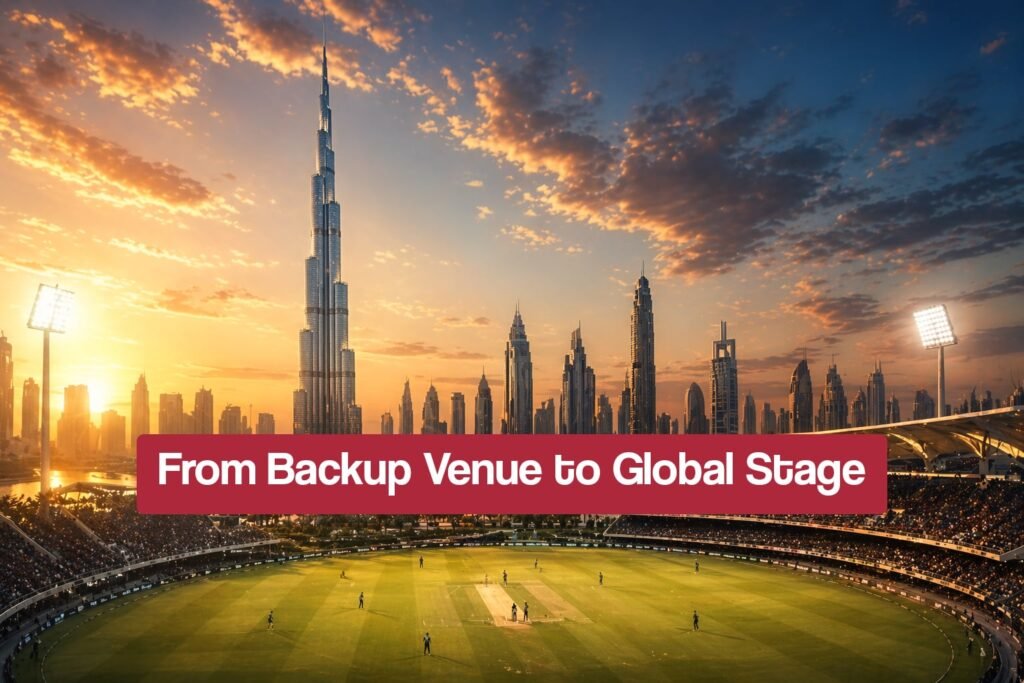
Cricket ignited a revolution in the UAE long before economists started discussing it. In 2020, amid a global pandemic, the UAE stepped in to host that year’s Indian Premier League (IPL). Taking steps to host the event was not just about providing a safe space to hold it. It was an experiment and a bold statement.
The move to host the 2020 IPL in the UAE not only staked its claim in cricket but also proved that there was a passionate fanbase among the three million strong expatriate community. The success of the event reshaped the UAE’s entertainment economy, influencing everything from stadium construction to streaming platform operations. Cricket was undoubtedly the catalyst for change and the most visible part of the UAE’s entertainment revolution. However, there were plenty of other parts moving beneath the surface.
From afterthought to powerhouse: UAE’s cricket transformation
Ten years ago, cricket in the UAE was a minority interest sport and had yet to make a name for itself on the global stage. Today, it has hosted the IPL, the T20 World Cup and the Asia Cup, and has its own flourishing domestic super league, the International League T20 (ILT20).
None of this happened by accident, but as a result of the deliberate exploration and implementation of major structural changes.
The places that made it possible
The UAE left no stone unturned in building a specialist cricket stadium. Dubai International Cricket StadiumThe Sharjah Cricket Stadium and Abu Dhabi’s Zayed Cricket Stadium form a trio of world-class stadiums that have become some of the most important venues in world cricket.
Of these three, Sharjah Stadium is the oldest, built in 1982. Nevertheless, a series of intensive updates in 2015 have brought it in line with the world-class standards of its two sister stadiums. Despite the upgrades, the legacy of the Sharjah Cricket Stadium is evident, as it holds the Guinness World Record for hosting the most One Day International (ODI) games.
The tournament that proved the point
By taking steps to save the 2020 IPL season, the UAE was able to prove that it had the infrastructure and capacity to organize an event of the IPL’s size, and it did so successfully. This was followed by the shortening of the 2021 IPL season, the 2021 T20 World Cup and two consecutive Asia Cup competitions.
The success of these events has firmly established the UAE at the center of the cricket world. The 2020 IPL alone is reported to have earned the country over $500 million in sectors such as hospitality, tourism and broadcasting.
The demographic story behind the numbers
An important part of the UAE becoming a leading cricket hub is driven by the diverse types of people who live there.
Population shaped by South Asian migration
The spiritual home of cricket is South Asia, especially countries like India, Pakistan and Bangladesh. Of the 10 million people living in the UAE, there are 2.7 million Indian expatriates, 1.5 million Pakistanis and 700,000 Bangladeshis. There are many people here from Nepal and Sri Lanka, both major cricket playing countries.
This important demographic is the backbone of the UAE’s workforce and, as a result, its economy. Coming from countries where cricket is akin to a religion, it means there is a hungry fan base that wants a chance to watch the game they love live.
Spending power that reshapes markets
The South Asian expatriate community not only constitutes a large portion of the general population of the UAE, but also has a wide economic reach. South Asian workers are found in blue-collar positions such as construction, to senior professionals in fintech, healthcare and hospitality sectors. Senior level positions include doctors, lawyers, bankers and business owners. These positions in particular provide significant disposable income, which combined with the love of cultural familiarity provides a strong platform for cricket to grow on.
Cricket is a major constant throughout South Asia. An Indian living in Chennai may have little in common with someone from Pakistan or Sri Lanka. However, they are all likely to be familiar with their favorite sport and ready to set their own schedule for it.
This shared cultural experience provides an important opportunity for the UAE to build its cricket reputation.
cricket is just the beginning
The South Asian influence on the UAE’s entertainment industry is most visible in cricket, but a closer look reveals many other forces that have helped shape it.
Bollywood, Regional Cinema and Streaming
Across Dubai, cinemas show Hindi, Tamil and Telugu films on their official Indian release dates. They do this out of necessity, as it has had a significant impact on South Asian audiences in the UAE Bollywood box-office figuresMaking it a leading metric for many Indian studios.
Additionally, streaming services like Hotstar, Zee5 and SonyLIV offer dedicated UAE subscription tiers for more than just live cricket. These platforms offer Indian TV dramas, reality shows, and even region-specific content. Businesses do not go so far as to look internationally unless it is justified by the returns.
Live entertainment and concert economy
Live entertainment, such as Bollywood concerts, regularly sell out large venues in Dubai. Apart from concerts, Indian stand-up comedians like Zakir Khan, Kenny Sebastian and other best-known artists from the South Asian community regularly stop at UAE venues.
The live music economy in the UAE is relatively young, having existed barely 15 years ago, but now generates significant revenue through performances of various South Asian artists.
Digital entertainment and online space
The digital sector in the UAE is equally dominated by South Asian consumers who are active online. Popular social media trends in India reach Dubai almost instantly. online gaming platforms and Trusted new online casinos for UAE players Caters directly to the South Asian community and has already seen significant growth and real business appeal.
where is all this going
The prominence of South Asian culture in the UAE’s entertainment sector is not a sudden phenomenon, but a fundamental pillar that will allow the UAE to build for the future. The UAE is investing heavily in this initiative, with a clear eye on building something that future generations can enjoy.
UAE’s strategic position as an entertainment hub
TeaThe UAE has deliberately marketed itself as an ideal neutral ground for South Asian entertainment that cannot take place within South Asia. international cricket match between india and pakistan is a prime example. Political tensions between nations make hosting the Games essentially impossible. However, hosting the game in Dubai means packed stadiums with fans from both countries. The UAE is geographically perfectly placed and has the money, infrastructure and local audience to make it not only workable but also profitable.
Saudi Arabia and Qatar are also investing heavily in entertainment with an eye on South Asian events; However, the UAE has a significant advantage in terms of both existing infrastructure, expatriate networks and established locations.
A growing, not shrinking, impact
With an established landscape for South Asian culture and entertainment, the next generation of UAE-born South Asians are growing up with their identities firmly rooted in both cultures. This means that the demand for South Asian entertainment is not going to decrease but will continue to increase from generation to generation.
Focusing on the emirate, the ongoing investment by both UAE and South Asian platforms is not for the current rush but for the future.
big picture
The cricket boom in the UAE is real, well documented and is here to stay. However, when you look more closely at the influence of South Asian culture on the UAE’s entertainment sector, it is clear that it goes much deeper than mere loyalty to the game. Nearly 60% of the UAE’s population is of South Asian descent, and the appetite for culturally relevant content is strong. Cricket is part of a broader strategy across the emirate, along with streaming, live sports and concerts, food and digital platforms.