
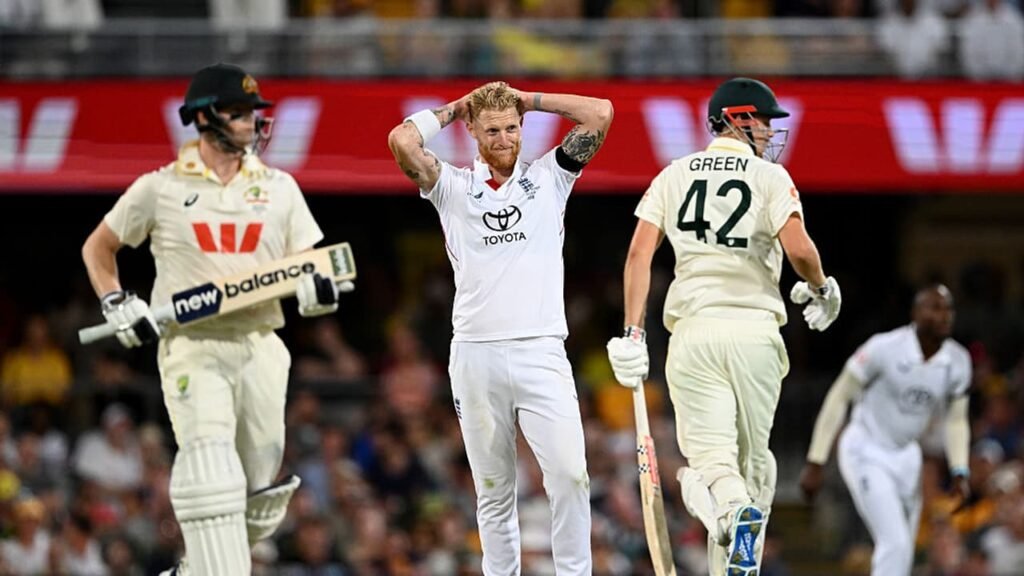
The England national cricket team has taken a clear position against playing any pink-ball, day-night Test in the 2029-30 Ashes series in Australia. According to reports, the England and Wales Cricket Board (ECB) has informed Cricket Australia (CA) that they do not want to play Test matches with the pink ball on future tours.
England had to face defeat in the day-night test at Gabba last month. They lost the match by eight wickets, leaving them 2–0 behind in the Ashes series. England later lost the series 4-1. The result has become part of the wider debate about the Ashes, at a time when pressure for change in Test cricket is increasing.
England oppose pink-ball Test in 2029-30 Ashes despite 2027 MCG exception
According to the BBC, the ECB used the post-series discussions to reveal that it does not want to include another pink-ball Test in the 2029–30 Ashes, even though the series is still more than three years away.


Australia has hosted the majority of day-night Tests since the format began. While both boards are reviewing ways to safeguard the Ashes’ status as one of cricket’s premier competitions, England believe the series does not need a floodlit Test to retain its importance.
However, England and Australia will play a one-day day-night Test at the Melbourne Cricket Ground in March 2027 to mark 150 years of the first Test match at the venue. Those plans were confirmed in August 2024, with England expected to play a practice match beforehand.
Opinion is divided on the decision to use the pink ball for that anniversary Test. It was reported that a former Australian player has raised concerns directly with Cricket Australia and has called for the traditional red-ball match to be reintroduced.
Broadcasters support pink-ball Test, but questions remain over use of the Ashes
Broadcasters support the pink ball Test because the timing suits TV audiences. The Brisbane Ashes Test attracted a higher number of television viewers than the matches in Perth and Adelaide. Cricket Australia does not need to schedule a pink ball Test every season.
Australia will host eight Test matches against Bangladesh and New Zealand in 2026-27, and none of them will be day-night games.
The International Cricket Council sanctioned day-night Tests in 2015 with the aim of attracting larger audiences and improving engagement. Australia has won 14 out of the 25 day-night Tests played so far. In contrast, England have won two from seven matches, while Australia have lost four.
A series like this, is it needed? – Joe Root
On the eve of the Brisbane Test, Joe Root questioned the need for a pink-ball Test, although he admitted it could still be part of the schedule.
“A series like this, is it needed? I don’t think so, but that doesn’t mean it shouldn’t be here,” Root told Test Match Special.
The pink ball on the field behaves exactly like the red ball in Australia. It does not change the swing or seam movement for fast bowlers. The main challenge for the batsmen is to see the ball clearly in floodlight. Mitchell Starc has taken more wickets than any other player in the day-night test.
Also read: England announces ‘ban’ on players’ unprofessional activities after Harry Brook controversy, Ashes humiliation
