


table of contents


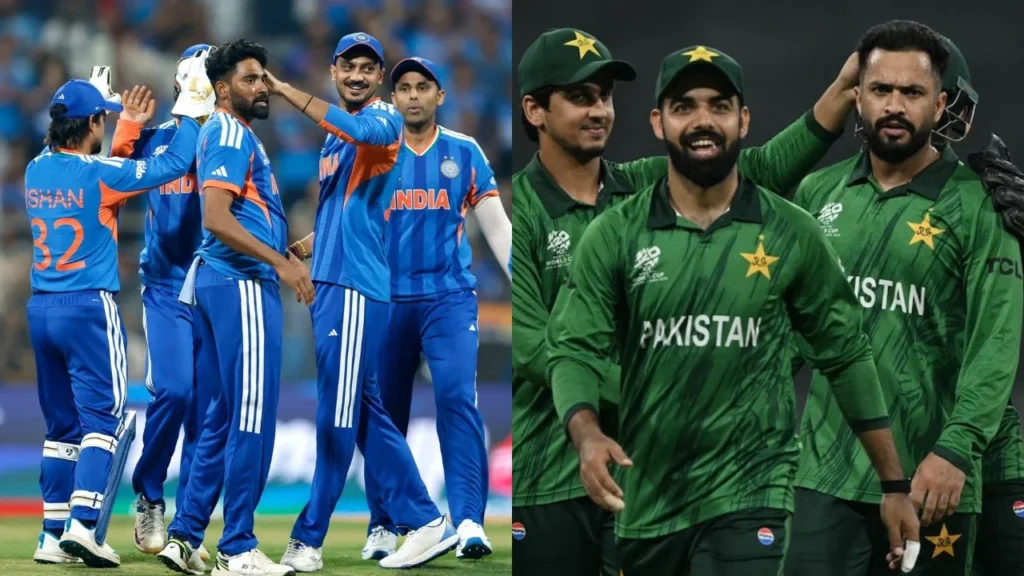
All-rounder Khushdil Shah has made some controversial comments on the famous India-Pakistan rivalry. India-Pakistan matches have always been full of drama, pressure and emotions.
Shah alleged biased umpiring during India-Pakistan matches as he discussed high-voltage games and the unique environment surrounding multi-national events.

Khushdil Shah creates massive controversy with explosive India-Pakistan claim
Speaking during a podcast, Khushdil Shah said that India-Pakistan clash always brings extra pressure and emotions because of the history and rivalry between the two cricket giants. The left-hander also claimed that several factors work in India’s favor whenever the two teams clash.
Also read: “A lot of question marks”: R Ashwin criticizes Gautam Gambhir and Ajit Agarkar over Kuldeep Yadav’s misbehavior
The all-rounder claimed that several factors went in India’s favour, including umpiring decisions, which left the Green team feeling deprived and left everyone stunned. Nevertheless, Khushdil admitted that beating India is one of the most satisfying achievements for Pakistani players because of the pressure, expectations and emotions of this rivalry.


Khushdil Shah said on the podcast with ARY, “The matches against India bring some extra emotions, and then the pressure goes away a little bit. When we were playing, we used to beat them as well. The other thing is that during the matches, a lot of things happen which go in their favour. Umpiring decisions go in their favour, like some dressing room decisions, and even the matches are conducted as per their wish. Despite all this, when Pakistan wins, If it is, then it is especially pleasant.”
Shah happy on playing against India.
“The matches against India bring some extra emotions and then the pressure goes away a bit. When we played, we also beat them. Things go in their favor during the match. Umpiring decisions go in their favour, as do some… pic.twitter.com/suNHPDz1eC
– Sherry. (@CallMeSheri1_) June 7, 2026
India beats Pakistan in global events
Well, the Man in Blue has dominated this India-Pakistan rivalry. Pakistan’s last win over India came during the Super Four stage of the 2022 Asia Cup in Dubai. Since that win, the Indian team has defeated Pakistan six consecutive times in multi-national tournaments.
Pakistan’s record against India in ODI matches has also been disappointing. Pakistan’s last ODI win over India was in the 2017 ICC Champions Trophy final, which was one of the most memorable nights in their history. Since that defeat, India has won every ODI match against them.
PCB and ECB oppose two-tier WTC, support level playing field for all 12 Test nations
Meanwhile, there have been discussions about a possible two-tier ICC World Test Championship (WTC), but this would make things difficult for smaller countries. One of the biggest concerns is that the two-division format could widen the gap between powerful cricket boards and the rest of the world.
Also read: “Haven’t even taken the captaincy yet”: Kris Srikkanth questions Ajit Agarkar on Axar Patel giving away vice-captaincy to Tilak Verma
Reports suggest that both the Pakistan Cricket Board (PCB) and the England and Wales Cricket Board (ECB) are not in favor of dividing Test cricket into two tiers. Instead, they want all 12 Test-playing nations to remain part of the same WTC structure.
Small countries fear financial shock
Many smaller cricket boards are heavily dependent on host nations such as India, England and Australia. Whenever one of these teams tours another country, the stadiums are packed, television viewership increases and sponsors show more interest. These series often bring significant revenue to the host board.
If Test cricket is divided into two groups, the fear is that the top teams will mostly play each other. This would mean fewer opportunities for smaller countries to host high-profile opponents, which could seriously impact their earnings and overall growth.
The “Big Three” – BCCI, ECB and CA – are the richest and most powerful in world cricket and generate huge revenues through international cricket and domestic leagues. Therefore, other countries like Pakistan raised their voice strongly against this model.