table of contents

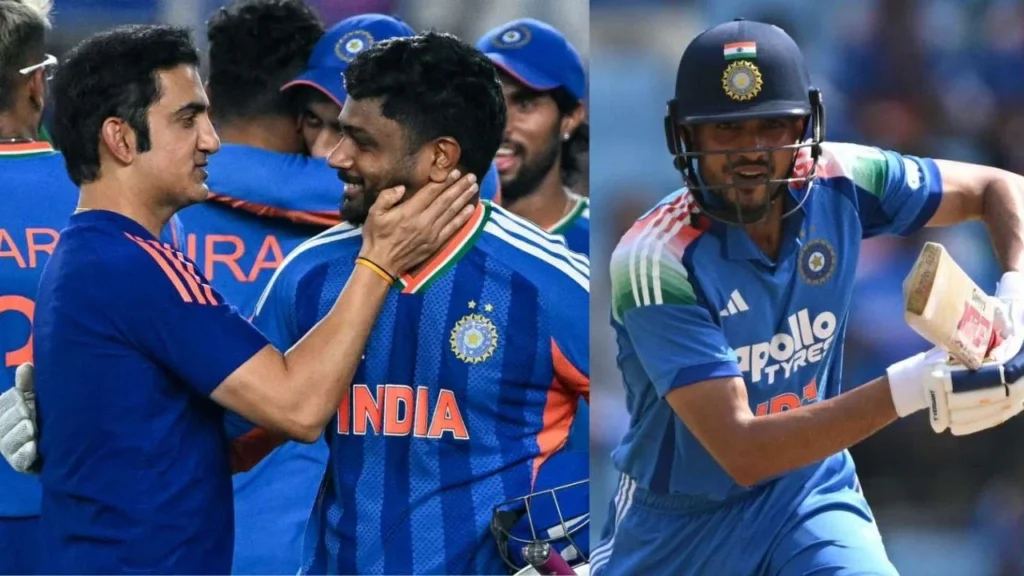
A recent report by Cricblogger claims that Gautam Gambhir’s influence extends beyond coaching duties and into several key selection discussions involving India’s T20I team.
According to the report, the head coach’s views played a key role in the decisions related to Shubman Gill, Sanju Samson and teenage batting sensation Vaibhav Suryavanshi. Furthermore, Mohammed Shami believes that Gautam Gambhir is hindering his return to India.
What does the report claim about Shubman Gill being left out of India’s T20I plans?
One of the most notable claims in the report was the suggestion that leaving out Shubman Gill from India’s T20I plans ahead of the T20 World Cup was not simply a decision of the selectors.
According to sources cited by Cricblogger, Gautam Gambhir did not strongly support Gill’s case during the selection discussion. The report claims that the lack of support despite his stature in Indian cricket ultimately worked against the batsman.
Shubman Gill was seen as one of India’s long-term leaders and remained a regular feature across all formats. However, India’s T20I setup has undergone significant changes over the past year, with the management prioritizing specific roles rather than mere prestige.

While the report does not suggest that Gambhir outright dropped Gill, it does indicate that the head coach’s priorities may have been given considerable weightage during those conversations.
Why did Vaibhav Suryavanshi’s selection become a part of Sanju Samson debate?
The report also links Gautam Gambhir to another high-profile decision involving Vaibhav Suryavanshi and Sanju Samson.
Despite Sanju Samson being one of India’s most important performers during the T20 World Cup-winning campaign, Gautam Gambhir preferred to give a chance to Vaibhav Suryavanshi. The teenager has taken tremendous momentum to the national level following a record-breaking IPL season and strong performances at the age-group level.
This posed a difficult choice for management. On one side was a 15-year-old player considered one of the most exciting talents in world cricket. On the other side was Samson, who played a major role in India’s recent T20 World Cup win and was named the Player of the Tournament.
The report claims that Gambhir backed Suryavanshi when the management had to decide between sticking with an established performer and accelerating the development of a generational prospect against England.
This question remains even after Sanju Samson’s mistake
What surprised many observers was how quickly Samson lost ground. The wicketkeeper-batsman entered the UK tour as one of India’s leading T20 players following his stellar World Cup campaign. However, a string of low numbers opened the door to change.
According to the report, questions were raised in the cricket world as Sanju Samson was dropped after just three failures despite his recent contribution to India’s success.
The situation seemed particularly notable as Gautam Gambhir was previously linked to discussions surrounding India’s T20 captaincy, with Sanju Samson reportedly seen as one of the contenders before Shreyas Iyer was appointed.
That background inevitably raises the question of what changed so quickly. The report also claims that Sanju Samson was unhappy with the way developments unfolded, especially because Vaibhav Suryavanshi was not used during the Ireland series just before the England tour.
What do these reported decisions reveal about Gautam Gambhir’s selection philosophy
Whether or not the report’s claims are entirely accurate, they point to a clear perception of how India’s current management approaches selection. The common thread connecting the Gill, Samson and Suryavanshi decisions is the desire to prioritize future planning over past achievements.
Shubman Gill remains one of India’s leading batsmen. Samson recently completed a highly successful T20 World Cup campaign. Yet the duo reportedly found themselves on the wrong side of the selection call as the management looked at different options.
This approach is in line with Gautam Gambhir’s public reputation throughout his playing and coaching career. He has often emphasized competition for places, role clarity and long-term planning rather than reputation-based selection.
If the report is accurate, it suggests India’s management is prepared to take tough decisions, even if those decisions involve established players.