
table of contents

The England vs New Zealand third and final Test match has ended with the Kiwis suffering a crushing 160-run defeat to the Three Lions at Trent Bridge on Monday. Ben Stokes and his team have lost a Test series at home for the first time since 2012 and this is a matter of concern for English cricket, as they have not won a single series in the last three series they have played.
Ben Stokes stepped down as captain and also announced his retirement before the end of the fifth day. He announced on Sunday that he would retire and also step down from the leadership role after the conclusion of the third Test match.

Ben Stokes retires after nightclub controversy
The decision came after a nightclub brawl where he was involved in a physical altercation with a former rugby player. He, along with fast bowler Gus Atkinson, was suspended from playing the second Test after violating curfew rules. Both returned in the third Test match, but Stokes said goodbye to his international career.
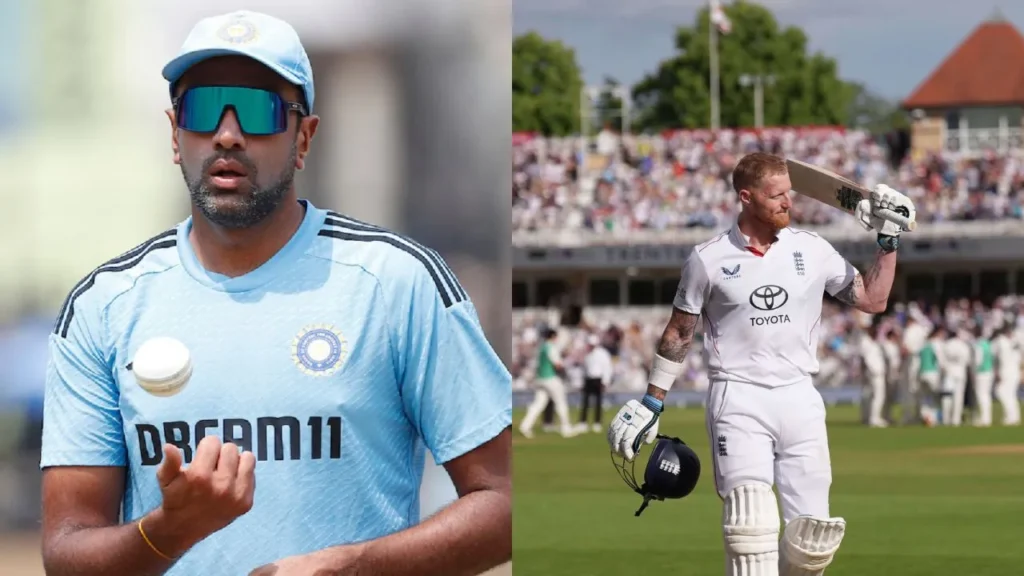
Many former cricketers and experts have shared their different views on the curfew violation and Ben Stokes’ retirement chaos. Now former Indian cricketer Ravichandran Ashwin has expressed his views about the protocol violation and Stokes’ retirement.
“If you are the captain of an international team, you have responsibilities” – Ravichandran Ashwin criticizes Ben Stokes for being irresponsible
Ravichandran Ashwin, while talking on his YouTube channel, said that there is no point in curfew or breaking the rules. If there is any rule then players will have to follow it. He also pointed out that the game of cricket has become corporatised, with PR agencies becoming a nightmare for cricketers.

Ravichandran Ashwin said, “If there is a curfew, there is a curfew. How do you handle it? These are not things you can ignore. You guys never imposed a curfew, didn’t you? We didn’t either. Times were different. Have you ever seen anyone imposing a curfew on Virat Kohli? It just doesn’t happen.”
“The point is that if you are the captain of an international team, you have responsibilities. And let me make it clear that Ben Stokes has been a brilliant cricketer. He has retired now. I am not saying anything negative about Ben Stokes. It is not him.”
“But these are the official rules. These are corporate rules. Cricket has now become a corporate game. For the ECB, it is a PR nightmare. Just put yourself in the ECB’s shoes for a minute. It is an absolute PR nightmare for them.”
“They expect players to fulfill these responsibilities” – Ravichandran Ashwin on ECB’s stronger rules
Ravichandran Ashwin further explained on the domestic format of English cricket, they have scouts and members of the county teams who follow the cricket very closely, and they expect the players to fulfill the responsibilities of playing the game properly.
“Each county has its own members, and they keep a very close eye on cricket. They expect players to fulfill these responsibilities. That’s why these rules have been made. There have been some incidents like this in the past as well. And the way England lost the Ashes in Australia, especially after the second Test.”
“You have to change your ways” – Ravichandran Ashwin on Ben Stokes not taking responsibility
Ravichandran Ashwin also said that when cricketers are young they do not have the responsibility of maintaining anything. They need to perform and party, enjoy the lifestyle, but as they grow up, they need to become a responsible person and as a captain, Ben Stokes should have shouldered this responsibility.
“I would say that when we are young and play cricket, certain habits develop naturally. But in the journey of international cricket, there comes a point where you have to change your path. You have to grow from a young cricketer to a responsible adult.”
“This change – from being a young cricketer without any major responsibility or accountability, where your only job is to play well, perform, enjoy, party and have fun – is completely understandable. But at some level, you have to grow into a responsible adult. If you are the captain of an international team or even a senior player, this responsibility comes with the role.”
