
table of contents

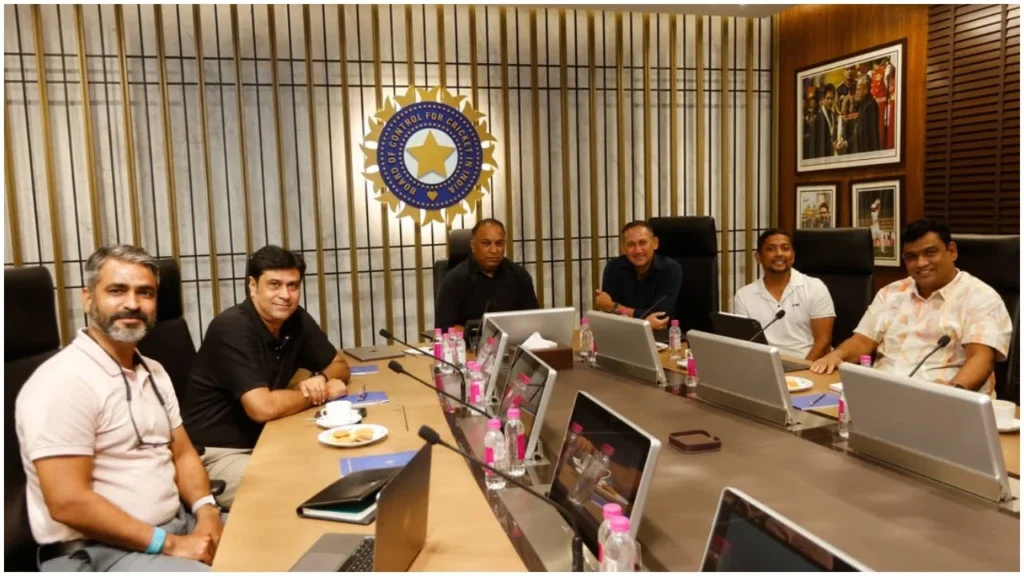
The Board of Control for Cricket in India (BCCI) has won a major legal battle after the Central Information Commission ruled that the board will not come under the Right to Information (RTI) Act. This was a major development in Indian sports administration that finally ended the years-long legal battle.
With this decision on Monday (May 18), the Board of Control for Cricket in India will not be forced to share internal information publicly, as government departments and public authorities are required to do under RTI rules.
2018 RTI verdict against BCCI finally overturned
The controversy began in 2018 when former Information Commissioner M. Sridhar Acharyulu had ruled that the BCCI should be treated as a public authority under the RTI Act.
At that time, the Indian Cricket Board was also asked to appoint a Public Information Officer under Section 2(h) of the Act so that people can directly file RTI applications and seek information from the board.
Also read: ‘I want Mitchell Starc to be available from day one’: Hemang Badani hits out at Cricket Australia

But BCCI strongly challenged that decision in Madras High Court. The case later went back to the Central Information Commission after the court asked the CIC to hear the case again considering important Supreme Court judgments relating to private bodies and public authorities.
CIC declares BCCI not a ‘public authority’
Now Information Commissioner PR Ramesh has given a new order in favor of BCCI. According to the judgment, the Indian Cricket Board does not fit the legal definition of “public authority” under Section 2(h) of the RTI Act.
The Commission informed that BCCI is registered as a private society under the Tamil Nadu Societies Registration Act. It also said that the Board was neither created directly by the Indian Constitution nor through any law passed by the Parliament. Because of this, the CIC said that the BCCI cannot automatically be treated as a government-controlled body.
Commission highlights private and independent structure of BCCI
The biggest issue discussed during the hearing was whether the government controls BCCI. The Commission clearly stated that there is no deep or direct government control over how cricket boards function.
As per the decision, the BCCI runs independently and handles its administration, decision-making and management without regular government interference. CIC also focused on the money power of BCCI.
Also Read: Michael Vaughan criticizes ECB-BCCI deal as Jofra Archer misses Lord’s Test for IPL 2026
The order states that the board is financially independent and earns revenue largely on its own through broadcasting rights, sponsorship deals, IPL earnings, ticket sales and other business activities. For this reason the Commission felt that BCCI cannot be considered financially dependent on the government.
Financial independence and lack of government control favored the board
Another important point working in the board’s favor was whether the tax benefits given to BCCI could be considered as government funding. But the Commission made it clear that the general tax exemptions and legal concessions available under Indian law cannot be termed as “substantial financing” under the RTI Act.
The order also highlighted how India’s huge cricket market and the incredible success of the IPL have made BCCI the richest cricket body in the world. The Commission found that simply introducing greater government control into such a large commercial structure may not automatically improve fairness or transparency and may even create operational problems.
“A model of oversight based solely on government control may fail to take these realities into account and risk unintended consequences, including inefficiencies or disruptions to a well-balanced economic structure,” the Commissioner said.
Indian Cricket Board will remain out of RTI till the new law is implemented
The matter originally reached the CIC after an RTI application was filed in the Ministry of Youth Affairs and Sports. However, the ministry said it did not have the information sought and could not transfer the application to BCCI as the board is still considered a private entity.
The Commission clarified that if BCCI ever has to come under the ambit of RTI in future, it may require an entirely new law or a special government order. Till then, the Board will continue to function as an autonomous private organization outside the direct control of RTI rules.